The math behind switching to a reusable bottle, and why it's simpler than you think.
We ran the numbers on plastic bottle consumption for a typical household in Mumbai. Not the dramatic, globe-scale numbers that get used to make people feel guilty. The actual, household-scale numbers that are relevant to the decision you're considering right now.
The results are not dramatic or abstract. They are just arithmetic, and the arithmetic is unambiguous.
The baseline assumption
A household of two adults in a metro Indian city, both of whom buy at least one 500ml plastic bottle of water per day when outside the home. That's a conservative estimate. Many households consume more. Call it 730 plastic bottles per year between both people.
At 12 grams per bottle (the approximate weight of a standard 500ml single-use PET bottle), that's 8.76 kilograms of plastic annually. From two people. From water alone. This does not include soft drinks, packaged juices, or any other beverage category.
What actually happens to those bottles
India's plastic recycling infrastructure, despite genuine improvements in the last decade, recycles less than 30% of post-consumer plastic. The rest goes to landfill, informal dumps, or water bodies. PET bottles take between 400 and 700 years to decompose in a landfill environment.
The bottle you drank from on your commute today will still exist in recognisable form when your great-great-great-grandchildren are alive. That is not an exaggeration. That is the chemical reality of PET plastic.
More immediately: microplastics shed from PET bottles have been detected in human blood, breast milk, and lung tissue in studies published in the last three years. The long-term health implications are still being studied, but the presence itself is documented and confirmed.
The reusable bottle calculation
A stainless steel bottle with a minimum 10-year lifespan replaces approximately 3,650 single-use bottles over that period for a daily user. The steel itself is 100% recyclable at end of life. The manufacturing carbon footprint of a stainless steel bottle is higher upfront than a single PET bottle, but it pays back within 3–4 months of use based on lifecycle analysis.
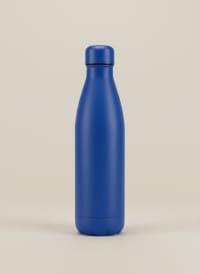
The Core Bottle costs ₹1,299. At a conservative 150 plastic bottles saved per year (accounting for the fact that most people don't buy a plastic bottle every single day), the cost per prevented bottle works out to roughly ₹8.66 over a 10-year period. A single-use 500ml water bottle in most Indian cities costs ₹15–20. You are saving money, actively, from the first month.
The part nobody talks about
The most honest thing we can say is this: the environmental case for a reusable bottle does not require you to care about the environment at all. It works on performance grounds alone. Colder water, no taste, no sweat on the outside, no morning rush to find a bottle to buy.
The environmental benefit is not a sacrifice you make for the planet. It is a natural consequence of choosing something better. That distinction matters to us, and it should matter to you. Products that require sacrifice to justify themselves eventually get abandoned. Products that simply perform better, don't.
What we recommend